looker banner
looker-logo Platform focus

THE LOOKER MIGRATION
PROBLEM IS CHANGING

Looker environments can accumulate years of LookML projects, models, views, Explores, dashboards, Looks and connections. Moving them is not simply a matter of recreating dashboards. The semantic model, query logic and relationships that define how users access data have to be understood. A new generation of migration approaches is beginning to change how that work gets done.

Sponsored by USEReady

MigratorIQ uses five specialized AI agents to automate legacy BI migration, while USEReady engineers govern critical handoffs and ensure production readiness.

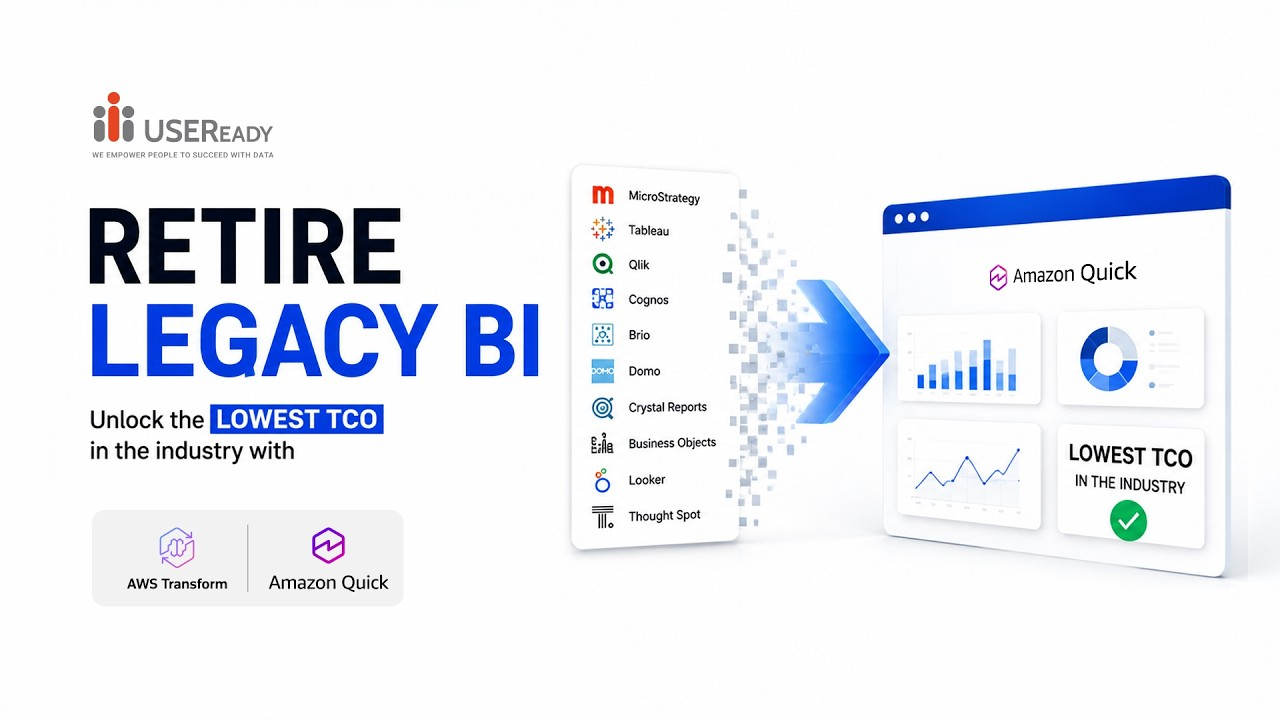
Retire legacy BI: unlock the lowest TCO in the industry with AWS Transform and Amazon Quick
The difference

Why Looker migration is different

A Looker environment is built around more than dashboards. LookML projects contain models and views, while models define database connections, Explores and relationships between views. Views define dimensions and measures, while Explores provide the starting point for querying modeled data.

That makes the migration problem less about moving individual pieces of content and more about understanding the model behind them. Which Explores depend on which views? How are joins defined? Which dimensions and measures encode business logic? Which dashboards depend on those models? Which connections and permissions need to change? And which parts of the estate no longer need to make the journey?

Video Looker migration: what changes with an agentic approach Watch Now
The estate

The Looker estate is more than dashboards

Before anything can be migrated, the estate itself has to be understood. That means looking beyond dashboards and saved content to the LookML projects, models, views, Explores, connections and permissions underneath the reporting layer.

A Looker model defines which database connection it uses and which Explores are available, while Explores reference views and can contain joins between them. Views define dimensions and measures that determine what users can query. Dashboards can then be built on those modeled structures, creating relationships that extend well beyond the dashboard itself.

icon-star Some content may be heavily used.
icon-boxes Some may depend on shared models or Explores.
icon-shield Some may carry access requirements.
And some may no longer have a reason to exist.

The challenge is therefore not simply to inventory the estate, but to understand it well enough to decide what should move, what should be rebuilt, and what should be left behind.

The model

How the Looker migration model is changing

The objective remains the same: understand the Looker estate, determine what needs to move, rebuild it on the target platform, and validate the result. What has changed is how the work can be performed.

Traditional migration

People at the center
traditional-migration-model
Discovery Analysis Migration Rebuild Testing

Specialist teams drive the work, often sequentially, with people responsible for understanding projects, models, views, Explores, connections, dependencies and business logic across the migration.

Migration accelerators

Automation supporting people
migration-accelerators-model
Automated discovery Conversion accelerators Metadata processing Report generation Testing

Repeatable parts of the migration can be automated, reducing manual effort while people continue to orchestrate the overall process.

USEReady's Approach

Agentic migration

Specialized agents working in parallel
agentic-migration-model Powered by MigratorIQ
Discovery Migration Semantic Validation Compatibility

AI agents can take on specialized migration workloads and work across multiple stages, while human experts provide oversight, judgment and exception handling.

USEReady's Agentic Migration Model

Powered by MigratorIQ, five specialized AI agents handle discovery, migration, semantic intelligence, validation, and enterprise compatibility, while human experts oversee critical handoffs and production delivery.

Destination platforms

Three destinations. Different paths to modern BI.

The right destination depends on your existing technology ecosystem, business needs, and vision for analytics. Each platform offers a different path to modernization.

Amazon Quick

Cloud-native analytics at scale

A modern, serverless BI platform that fits naturally into the AWS ecosystem, with built-in security, scalability, and a cost-efficient path to modern analytics.

destination-aws-art

Microsoft Power BI

Analytics across the Microsoft ecosystem

A powerful, integrated BI platform for organizations invested in Microsoft, with seamless connectivity, familiar tools, and broad business adoption.

destination-powerbi-art

Tableau

A proven platform for visual analytics

A powerful, integrated BI platform for organizations invested in Microsoft, with seamless connectivity, familiar tools, and broad business adoption.

destination-tableau-art